



Quick answer: For a routine abdominal spay incision, a well-fitted recovery suit may be a comfortable alternative to a cone if your veterinarian approves it. For wounds on the face, ears, neck or limbs—or for cats that can reach around softer protection—a correctly fitted Elizabethan collar is often the more dependable option.
The best choice is not simply the softest one. It is the option your cat cannot remove, push aside or reach around.
In Australia, spaying is commonly referred to as desexing. Whichever term appears on your discharge instructions, follow your veterinarian’s advice over any general online guide.
This article provides general information and does not replace your veterinarian’s post-operative instructions.
Recovery Suit vs Cone at a Glance
| Option | Often best suited to | Main advantage | Main limitation |
|---|---|---|---|
| Rigid Elizabethan collar | Head, face, ears, neck, limbs and cats determined to reach a wound | Usually provides the broadest reach prevention when correctly fitted | Can interfere with vision, movement, eating or drinking |
| Soft recovery collar | Some torso or rear-body wounds when the collar is wide enough | Softer around the neck and less likely to knock into furniture | Flexible edges may let some cats reach around it |
| Recovery suit | Covered abdominal or torso incisions, including some spay wounds | Leaves the head unobstructed and does not surround food or water bowls | Cannot protect the head or limbs and may hide changes in the incision |
No option is automatically suitable for every cat or every operation.
Why Cats Need Protection After Surgery
Licking is normal feline behaviour, but licking or chewing a surgical site can damage stitches, reopen the wound and introduce infection. An Elizabethan collar, soft recovery collar or surgical suit creates a physical barrier while the tissue heals.
According to VCA Animal Hospitals, the purpose of an e-collar is to prevent direct trauma to a wound or surgical site. The protection only works, however, if the cat genuinely cannot reach the affected area.
A recovery product is a barrier—not a treatment. It does not replace pain relief, wound checks, activity restriction or follow-up care prescribed by your vet.
When a Cat Recovery Suit May Be the Better Option
A recovery suit covers the torso while leaving the head and neck free. It may be suitable when:
- The incision is on the abdomen or another area fully covered by the garment.
- Your veterinarian agrees that fabric coverage is appropriate.
- The suit remains securely positioned when your cat walks, stretches, sleeps and uses the litter tray.
- You can remove or open it as instructed to inspect the incision.
- The fabric stays clean and dry.
A suit can make eating, drinking and moving around the home easier because nothing surrounds the cat’s face. It can also be useful for cats that become highly distressed in a cone.
However, a recovery suit is not a universal cone replacement. It cannot protect wounds on the eyes, ears, face, neck or lower limbs. A loose opening may also allow a flexible cat to reach the incision, while a wet or soiled suit can irritate the covered area.
For male cats after neutering, ask your veterinarian whether a suit provides suitable coverage without interfering with toileting. The answer depends on the procedure and garment design.
When a Rigid Elizabethan Collar May Be Safer
A traditional e-collar is often the most reliable choice when:
- The wound is on the head, eyes, ears, neck, legs or paws.
- Your cat persistently bites, scratches or chews the affected area.
- A softer collar bends when the cat presses against it.
- The cat can move a recovery suit aside.
- Your veterinarian specifically requires a rigid collar.
A correctly fitted cone can prevent the mouth from reaching the body and help stop the paws from scratching the face. Its main disadvantage is that some cats find it awkward or stressful.
The Cat Protection Society of NSW notes that e-collars can interfere with eating, drinking, grooming, vision and movement. These problems should be managed—not solved by leaving the wound unprotected.
Where a Soft Recovery Collar Fits
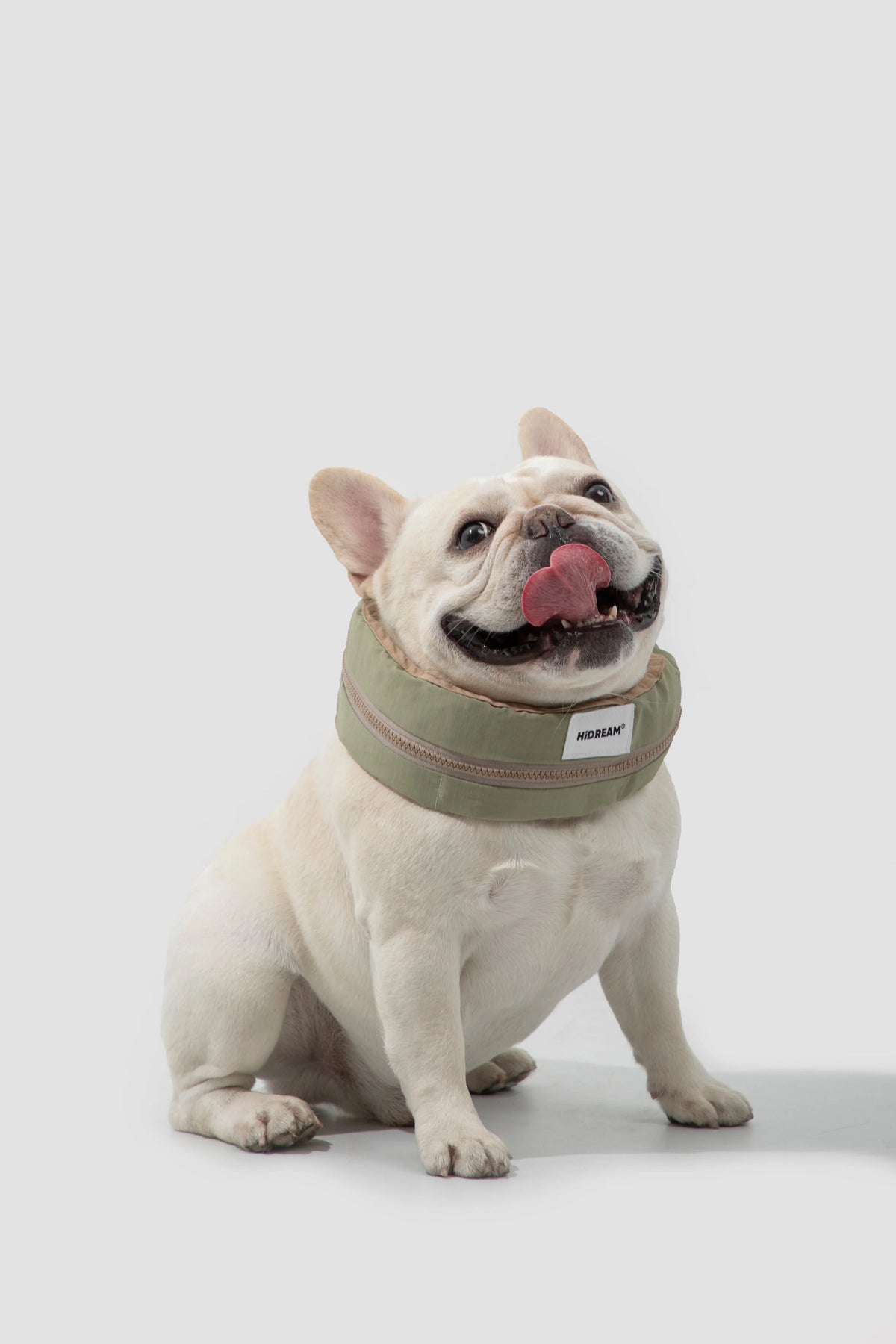
Soft cones and padded recovery collars sit between a rigid cone and a recovery suit. They may give a cat more comfortable head movement while still creating a barrier around the neck.
Their effectiveness depends heavily on:
- The wound location.
- The collar’s outer diameter.
- How easily the edge bends.
- The cat’s neck length and flexibility.
- Whether the cat can push a paw underneath it.
Do not assume a collar works just because it fits around the neck. Watch your cat turn, curl, sit and groom while supervised. If the mouth or paws can still reach the wound, the protection has failed.
What Does the Research Say?
Evidence comparing recovery garments and Elizabethan collars in cats is still limited.
A 2025 randomised clinical trial compared 13 cats wearing e-collars with 13 wearing wound-protection corsets after ovariohysterectomy. Pain scores, rescue pain relief and cortisol measurements were similar between the groups. Ten of the 13 cats wearing e-collars displayed behaviours such as head shaking or attempts to remove the collar, while none were recorded in the corset group.
That small study suggests a recovery garment may be more comfortable for some cats after an abdominal spay. It does not prove that suits heal wounds faster or that they are suitable for every surgery.
A separate survey of 434 dog and cat owners found that 77.4% reported worse quality of life while their pet wore an Elizabethan collar. This was an owner-reported, mixed-species survey—not a direct safety comparison between cones and suits—but it shows why fit, monitoring and appropriate alternatives matter.
The evidence supports a balanced conclusion: choose the least disruptive option that still provides reliable wound protection and is approved by your veterinarian.
How Long Should a Cat Wear a Cone or Recovery Suit After Spay Surgery?
There is no universal number of days.
Many cats require protection for roughly 7–14 days, but the correct duration depends on the operation, stitch type, wound location and healing progress. Some injuries require protection for only a few days; others need several weeks.
Keep the protective device on until your veterinarian confirms that it can be removed. Do not remove it overnight merely because your cat appears settled. Licking can happen quickly when nobody is watching.
If your vet allows supervised removal for meals or wound inspection, make sure you know how to refit the device correctly. VCA advises that two fingers should fit comfortably between an e-collar and the cat’s neck.
Fit and Safety Checklist
For a rigid or soft collar
- Confirm that it is secure without restricting breathing or swallowing.
- Check that two fingers fit comfortably at the neck.
- Test whether your cat can reach the wound from several positions.
- Inspect the neck daily for rubbing, redness or trapped moisture.
- Keep the collar clean.
- Remove access to narrow spaces where the collar may become caught.
- Keep your cat indoors unless directly supervised.
For a recovery suit
- Select the size using your cat’s actual neck, chest and back measurements.
- Make sure the fabric lies flat without pulling under the legs or restricting movement.
- Confirm that the entire wound remains covered when the cat stretches or curls up.
- Keep the toileting area unobstructed.
- Replace or wash the suit if it becomes wet or soiled.
- Inspect the incision at least daily, or as directed by your veterinarian.
For an abdominal incision, compare the coverage and measurements of HiDREAM’s Cat Surgery Recovery Suit. For cats whose veterinarian approves a softer collar, compare the dimensions of the Flower-Shaped Elizabethan Collar and Soft Tapered Elizabethan Collar.
HiDREAM sells these products, but no soft collar or suit is suitable for every wound. Your veterinarian’s recommendation and an actual reach test should determine which option you use.
Can Cats Eat, Drink and Sleep in a Cone?
A correctly fitted e-collar is generally intended to remain on while a cat eats, drinks and sleeps. Some cats need help adjusting.
Try:
- A shallow plate or bowl narrower than the collar opening.
- Moving the bowl away from walls.
- Raising the bowl slightly on a stable, non-slip surface.
- Removing clutter and blocking tight hiding places.
- Monitoring food, water and litter-tray use closely.
Contact your veterinarian if your cat cannot eat or drink with the device, becomes severely distressed, injures itself trying to escape, or cannot use the litter tray normally. Do not leave the wound unprotected without veterinary advice.
When to Call Your Vet
Contact your veterinary clinic promptly if you notice:
- The wound reopening or unexpected bleeding.
- Missing or damaged stitches.
- Increasing redness, heat or swelling.
- Discharge, pus or an unpleasant smell.
- Persistent licking despite the protective device.
- Severe pain, repeated vomiting or unusual lethargy.
- Refusal of food or water.
- No urination for 24 hours.
- A collar or suit that causes rubbing, breathing difficulty or restricted movement.
Your clinic would generally prefer an early question to a delayed complication.
Frequently Asked Questions
Do cats always need a cone after being spayed?
Not always. Some veterinarians may approve a recovery suit or another barrier for an abdominal incision. Other cats require a rigid cone because of their behaviour, wound location or ability to defeat softer protection.
Can a recovery suit completely replace a cone?
Only when the suit fully protects the wound, remains correctly positioned and is approved by the treating veterinarian. It cannot protect the face, ears, neck or most limb wounds.
Should the cone stay on at night?
Usually yes. Night-time is unsupervised, and a cat can damage an incision quickly. Remove it only according to your veterinarian’s instructions.
What if my cat keeps removing the cone?
Check the fit and contact your clinic. Your veterinarian may refit the collar, recommend a different design or decide whether a suit is appropriate. Do not repeatedly leave the wound exposed.
What if my cat can still lick the incision?
The current protection is not working. Refit it if you have been shown how, prevent further access and contact your veterinarian for a safer alternative.
The Bottom Line
For many routine abdominal spay incisions, a properly fitted recovery suit can be a comfortable option when the veterinarian approves it. A rigid e-collar remains the more dependable choice for many head, neck and limb wounds, or whenever a cat can defeat a softer barrier.
Choose by wound location and demonstrated protection—not appearance alone. The right recovery product is the one that stays safely fitted, allows essential daily activities and genuinely prevents your cat from reaching the wound.
Fact-checked against veterinary and animal-welfare sources on 23 July 2026. This guide is general information and is not a substitute for individual veterinary care.